
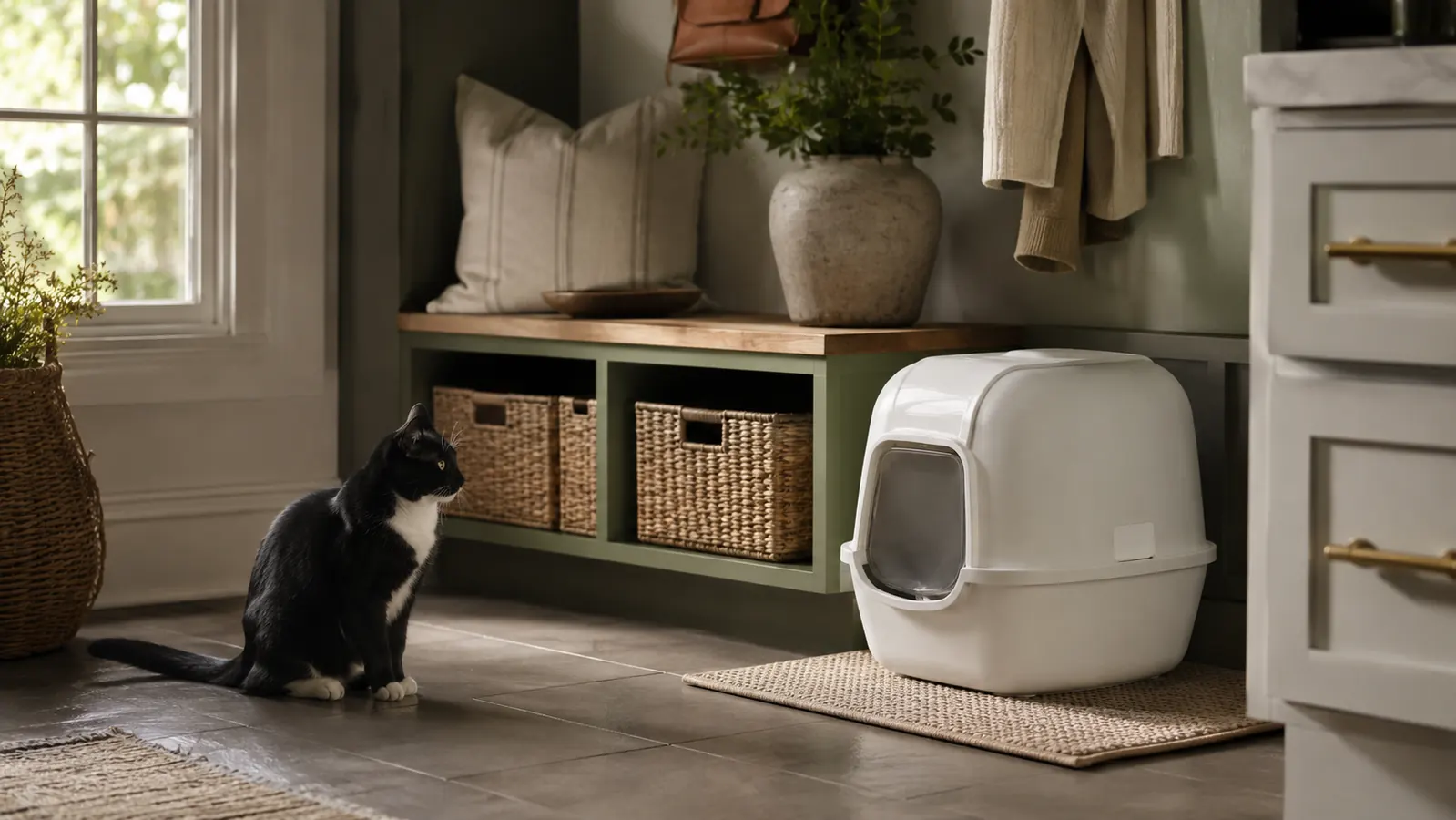
I am going to start with the thing that almost made us return this box, because it is the thing none of the photos show you. Ten days in, only one of our three cats would go anywhere near the swinging door on the Amazon Basics No-Mess Hooded Enclosed Litter Box, and I was standing in the mudroom nook asking myself whether I had spent good money to teach my senior tuxedo to hold it in. That is the honest start of this review.
For context, we are a three-cat house. Penny is our eleven-year-old tuxedo, the one with the strongest opinions and the weakest patience for surprises. Juno is our five-year-old orange tabby, and he is not a small cat, which matters for a box this size. Biscuit is our three-year-old calico, who will play with anything that moves. We have run the Amazon Basics hooded box in the mudroom nook off the kitchen since January, filled with the same unscented clumping litter we always used, and I have opinions about the door, the filter, and the smell that form the whole honest review.
The Quick Verdict
The smell control and scatter reduction are real and worth having, but the swinging door, the silently failing filter, and a hood that hides what an open tray shows you are the costs nobody prints. Great box for the right cat and the right routine. Not for everyone.
Amazon Check Today's Price →Read the middle before you buy, because the surprises are the review
The Amazon Basics hooded box genuinely fixed our hallway smell. It also comes with a door some cats hate and a filter that fails without telling you. Weigh all of that at today's price before you decide it belongs in your house.
Amazon Check Today's Price on Amazon →How I've Used It: The Routine That Made It Work
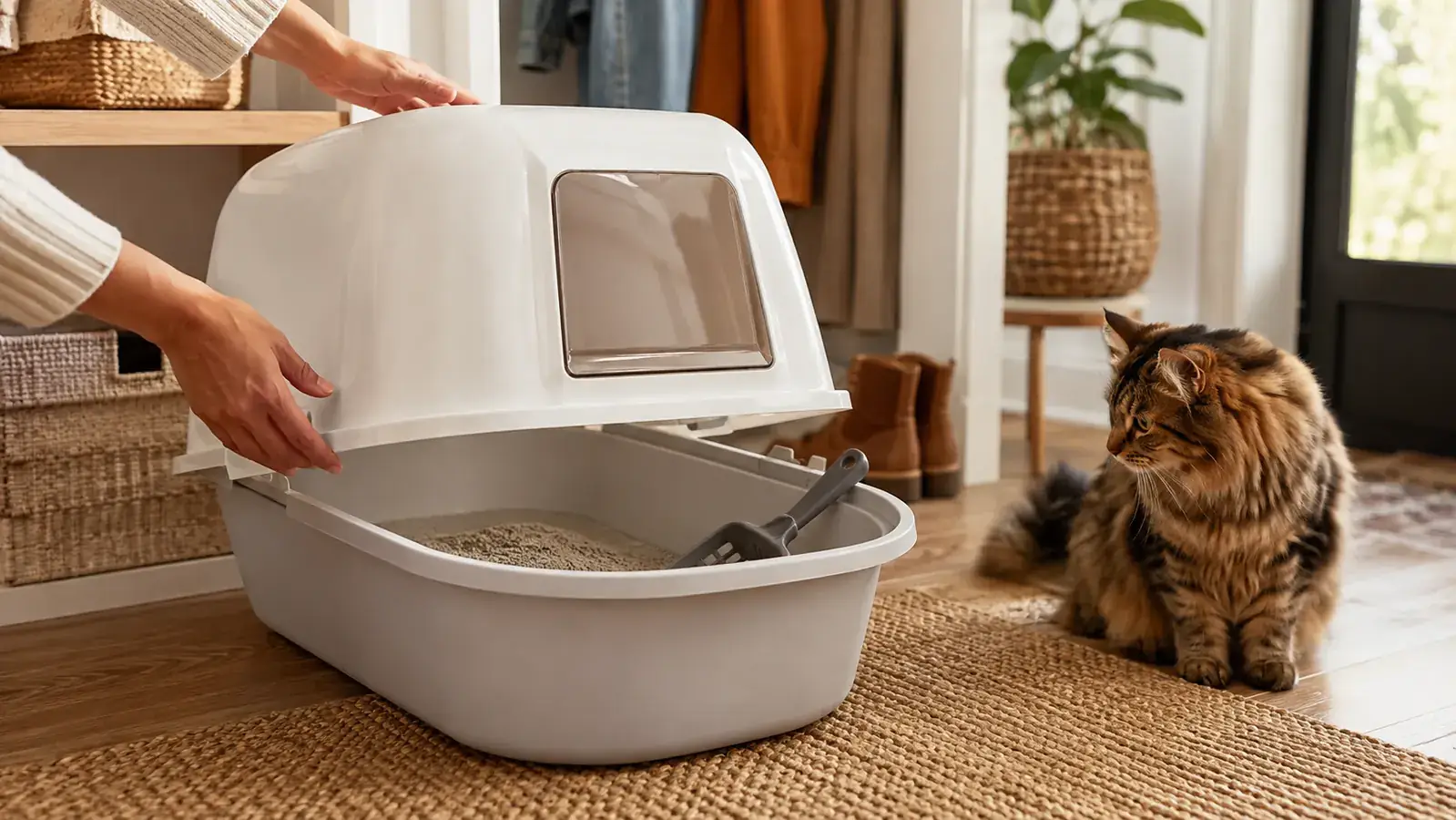
Setup is thirty seconds: the hood clips onto the base, the charcoal filter tucks into the lid, and the door snaps into the front frame. I did not move it from the spot the open tray had used, because cats are creatures of location, and a box is far more likely to be accepted where the old one already was.
Day to day I scoop into the grocery bag clipped to the side ring each morning, wipe the rim once a week, swap the charcoal filter about every four weeks, and give the base and hood a warm soapy tub wash once a month. That is more upkeep than an open tray asks, and I will not pretend otherwise. What it buys is a hallway that does not smell between scoops, which in a house with three cats had been the whole problem.
One time-saver nobody tells you: line the base with an ordinary garbage bag before you fill it, and the monthly scrub turns into a twice-a-year chore, because the liner is what takes the brunt and you just swap it. That is the single biggest shortcut in the whole routine, and I wish someone had told me on day one.
Here is the detail I want new owners to hear. The routine only stabilized once we stopped being stubborn about the door. Solve that first and everything else falls into place. Solve it wrong and you are left owning a box a cat refuses, so the door gets its own section.
The Door That Almost Cost Us the Box
Read the one-star reviews for this box and you will see a pattern: most of them are door reviews. The door pounds and sticks in the frame when it is new until it wears in, and a door that moves on its own is the first thing that spooks a cat whose eyesight or hearing has dulled. It is not a broken door. It is a door that behaves like a door, which is the whole problem for a nervous cat.
We took the door off for a month, and suddenly every cat used the box without a second thought. That is the honest fix, and the box does its job fine with the door off, you just give up a little containment and a little scatter control. When we put the door back, Juno charged straight through, Biscuit taps it first with a paw like a cat testing ice, and Penny still prefers it off.
Our compromise is probably not what the marketing had in mind: we run it doorless most days and snap the door back on when we want to cut scatter and odor drift. The box does both jobs well. It only refuses to do them for a cat who is scared of the door, and that is not a box defect. That is a cat being a cat.
Your Nose Stops Noticing, and the Filter Fails in Silence
People compare the carbon filter to a coffee filter and expect to see it tire. It does nothing of the sort. It is a foam disc that looks identical spent and new, so nothing ever tells you it is done, and by the time the smell tips you off, the odor has already been building inside the hood for a while.
There is a second trap underneath that one. Your own nose adapts to your own house within about a day, which means you stop smelling the very smell you bought the box to fix, while your guests still absolutely smell it. I only caught our filter running late because a friend finally mentioned it, and my first reaction was surprise that there was even a smell to mention. That is olfactory fatigue doing exactly what it always does.
So the replacement schedule has to be a calendar decision, not a nose decision. I change the filter on the first of the month no matter what. And be honest about what it buys: the filter forgives one missed morning, not one neglected week. Treat it like the forgiving day off you occasionally take, not like a subscription that does the scooping for you.
What the Hood Hides From You
Here is the thing nobody puts in the reviews, the one I think matters most. With an open tray you check the box every single time you pass it, a quick glance, and you register clump size, color, and frequency without thinking about it. That free daily glance is a health dashboard, and it is the quiet reason a lot of vets still prefer an open tray for older cats.
With a hood, checking means lifting the lid and leaning in, so you end up checking the box when the smell tells you to, which is exactly the wrong trigger. Our Penny is eleven, and urine output is the canary in that coal mine for an older cat. I am not willing to trade a free daily glance for occasional poking around. That is the one reason we still keep a small backup open tray in the laundry room, not because the Amazon Basics box fails, but because some mornings you need the box you can see into.
A neighbor of mine ran a covered box for years and only realized her cat's urination had changed when the cat ended up at the emergency vet with a bladder blockage, because the hood had hidden the smaller, more frequent clumps she would have spotted in an open tray. I am not going to sit here and claim one box caused that. I am going to claim that a hood makes it easier to miss, and for an older cat that is a real risk to take with your eyes open.
There is a softer version of the same problem. The hood makes the box easy to forget, and out of sight tends to mean under-scooped. When a chore stops looking urgent you do it less, and a litter box is not a chore you want to let get lazy. The hood hides the mess from everyone, and that includes you.
The No-Mess Name, Held to a Fair Standard
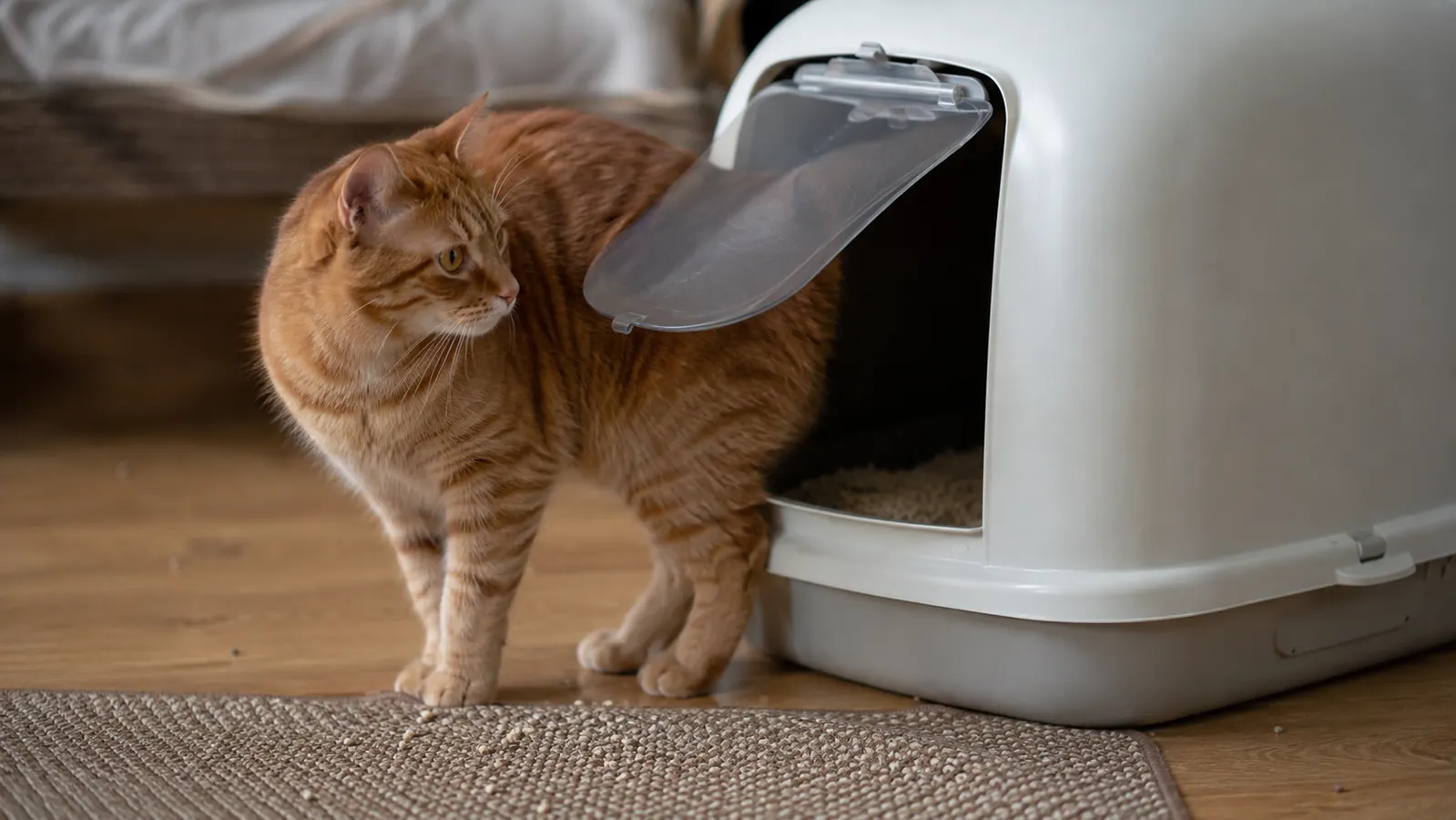
Let me be fair about the name, because it is doing more work than the box ever did. No box cleans itself, and this one never pretended otherwise. What the hood and door actually give you is containment, and containment is quietly underrated. With an open tray, Juno's digging put granules all over the nook. With the hood and door, the scatter drops by maybe half, and the fine dust stays put near the box instead of drifting into the kitchen.
It is half, not none. Granules still ride out on a paw, and a mat in front of the door earns its place in week one. And remember the footprint: the box is about 25 inches long and 16 inches tall, and it does not slide under a bench or hide behind a door the way a flat tray does. It is effectively a small piece of furniture, so measure the spot before you buy it the way you would measure for a shelf.
And if any of this sounds like your cat, take the door off on day one instead of day fourteen like we did. The door is the only part of this box that has an opinion, and a week of a cat refusing to eat or use the box over a door nobody warned you about is a bad week. Run it doorless for a couple of weeks, let everyone settle, then try the door. It is a reversible experiment, and it is the difference between a box that works and a box that sits unused while your cat rediscovers the coat closet.
What I Liked
- Door and hood genuinely cut odor and scatter in a multi-cat home
- Works fine doorless, which is the reliable fix for a nervous cat
- Simple construction, nothing mechanical to break, and it has held up since January
- Side bag ring and easy lid removal keep the daily scoop tamed
- Sturdy enough for a heavier orange cat who throws his weight around
Where It Falls Short
- Swinging door spooks older and cautious cats and sticks when new
- Carbon filter fails in silence, and your own nose stops noticing before your guests do
- Hood hides the clump size and color an open tray shows you for free
- Full cleanout is a monthly disassembly, more work than a flat tray
- Recurring filter cost that nobody adds into the sticker price
- Still tracks a little; the No-Mess name overpromises
We took the door off for a month and every cat used the box without a second thought. The door was never the problem. Our stubbornness about it was.
The Nitpicks Nobody Puts in the Photos
Three small things normally get edited out of reviews, so here they are. The plastic feels lighter than the photos suggest when you lift it empty, and it will tip if a heavy cat like Juno jumps up to perch on the hood, so keep it against a wall. The charcoal filter sits in a shallow tray inside the lid, and it slides out if you lift the whole box by the handle, which is exactly how one of ours ended up rolling under the bench. And the swinging door clicks against the frame at night, a sound I stopped hearing by week two but you will not be able to unhear on the first few nights.
None of those are reasons to skip the box. They are the everyday nicks that every covered box carries, the ones that only show up once the thing is actually in your house. After seven months I land here: it does the two jobs I bought it for, it asks for a calendar and a scooping routine it never enforces, and I would buy it again knowing now what the door and the filter really cost. That is as straight an answer as I can give.
Who This Is For
Buy this if you want the hallway to stop announcing itself, if you have a digger who launches litter across the room, or if you are comfortable scooping daily and putting a filter change on the calendar. It is a strong fit for a small apartment or a shared space where one corner has to do a lot of work, and it does that containment job better than any open tray I have used. A single-cat house gets the easiest version of it, because you will have only one opinion to negotiate with.
I would also tell a fellow dog person this, because I grew up with dogs and I know the reflex to make everything a kennel. The hood is not a kennel and it is not a way to leave a cat to itself longer. It is a lid on a scent problem, and it works exactly as hard as your scooping routine. Keep that straight and it will serve you well.
Who Should Skip It
Skip it if you are monitoring a cat's urine output for a health issue, because the hood fights every check-in you try to make. Skip it if your cat has already refused a covered box, because hope is not going to win that argument. Skip it if you have a genuinely large cat, because Juno at thirteen pounds turns around fine, but an eighteen- or twenty-pound cat is going to feel like a tall person in an airplane bathroom.
And skip it if you are not going to scoop daily and change the filter, because you will be paying extra for a box that quietly hides the problem until the cat solves it for you by going somewhere else. That is the honest, plain version of the whole thing.
None of that changes my bottom line after all these months. The hallway does not smell, the granules stay in the nook instead of the whole apartment, and every cat uses the box. I keep the door off for Penny, I change the filter on the first of the month, and I still glance into a backup open tray for the daily health check. That combination is what works for us, and it is the honest answer to whether an enclosed box is worth it.
The honest answer: yes, once you adapt to it
The Amazon Basics hooded box fixed our hallway, but it asked us to adapt first: take the door off for a cautious cat, change the filter on a calendar, and keep an open tray for the health check. Weigh all of that at today's price before you decide it is right for your house.
Amazon Check Today's Price on Amazon →