
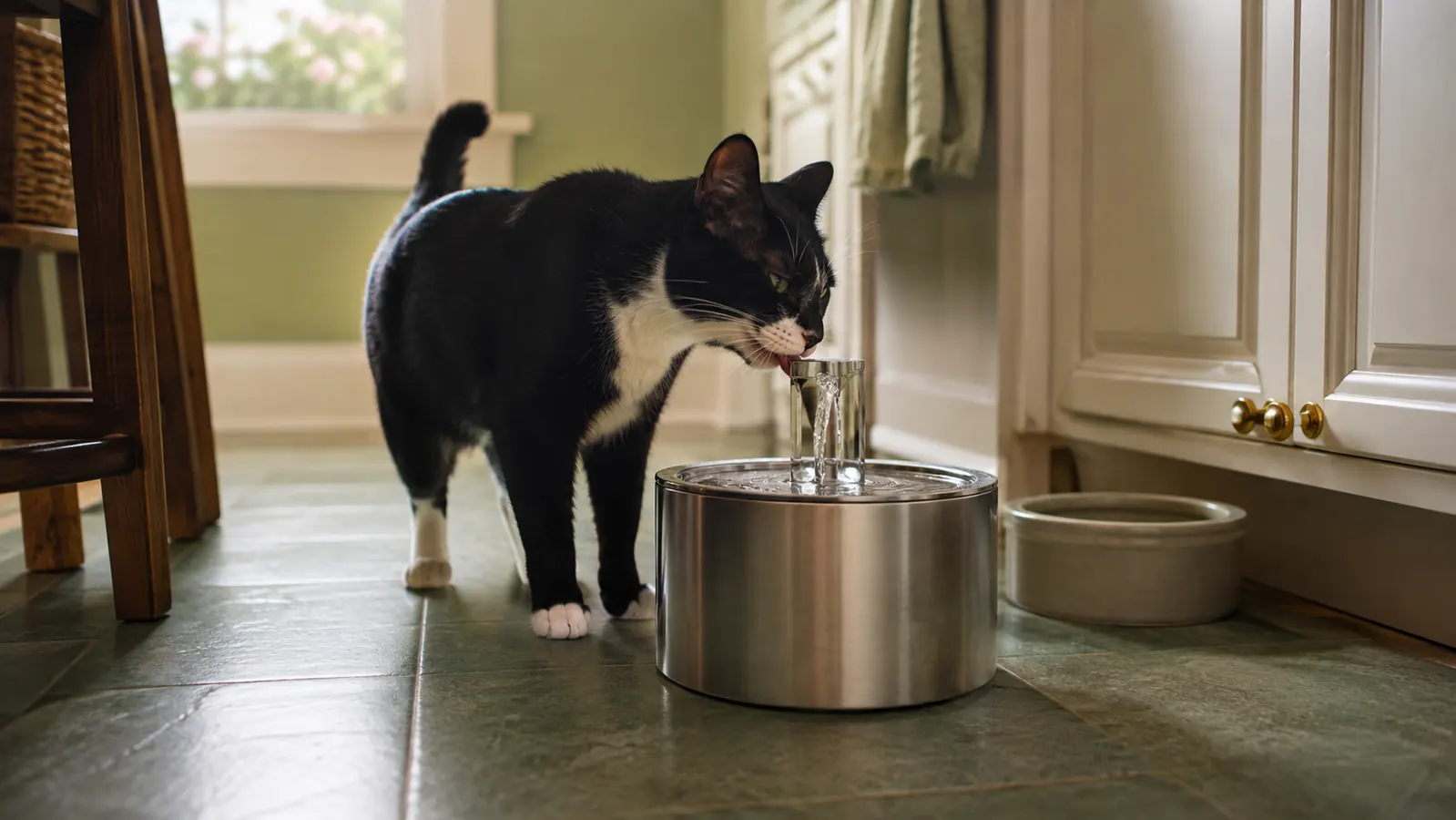
If your cat treats the water bowl like it is a suggestion, that is not pickiness. That is an animal reading the water. I say that as someone who grew up with dogs, where a puddle after a good rain is basically a fountain of youth. My three cats stand at the same bowl like it is evidence in a case against it. Mabel, our nine-year-old tuxedo, ignored her water for years and then stood on the bathroom counter licking the tap. Gus drinks like a dog when he bothers, and Clementine copies whatever Mabel does. When the vet said Mabel's urine was running concentrated and we needed to get more water into her, I did what every dog-person first instinct tells you to do. I bought a better bowl. Then a bigger bowl, then a shallower one after I read something about whisker fatigue, then a placement change to the back hallway away from the food. Mabel kept licking the tap. The fix was not a bowl at all. It was a Wonder Creature fountain, and I have been keeping numbers on the difference ever since.
This is the question I want to settle for you, because it came up in our house around the same time: cat water fountain versus a regular water bowl. The short answer, after weeks of one and then the other with nothing else changed, is that the fountain won. The Wonder Creature fountain with its stainless steel lid and 81-ounce tank costs more up front, wants filters, and has to be cleaned in pieces. It also changed what the water looked like to the cats, and that is the whole game. Here is what I measured, where the bowl still wins, and who genuinely should not switch.
| Feature | Wonder Creature Fountain (Left) | Regular Bowl (Right) |
|---|---|---|
| Upfront cost | Today's price, three filters and a mat included | A few dollars, or free if you already own one |
| Ongoing cost | Replacement carbon filters every few weeks | None, just rinse and refill |
| Capacity | 81 oz / 2.4 L, roughly five days for our three cats | 16-24 oz, refilled once or twice a day |
| Water freshness | Circulates and filters around the clock | Goes stale within hours |
| What cats see | Moving stream, reads as clean running water | Still water, reads as a puddle |
| Cleaning routine | Weekly teardown, scrub pump and basin | Thirty-second rinse, sometimes twice daily |
| Need for power | Small outlet and a pump with moving parts | None, works anywhere |
| Noise | Soft hum and a faint trickle | Silent |
| Multi-cat capacity | One tank serves several cats | Shared bowl, one spot at a time |
| Amazon rating | 4.4 stars, 57,000+ reviews | Not applicable |
Where the Fountain Wins
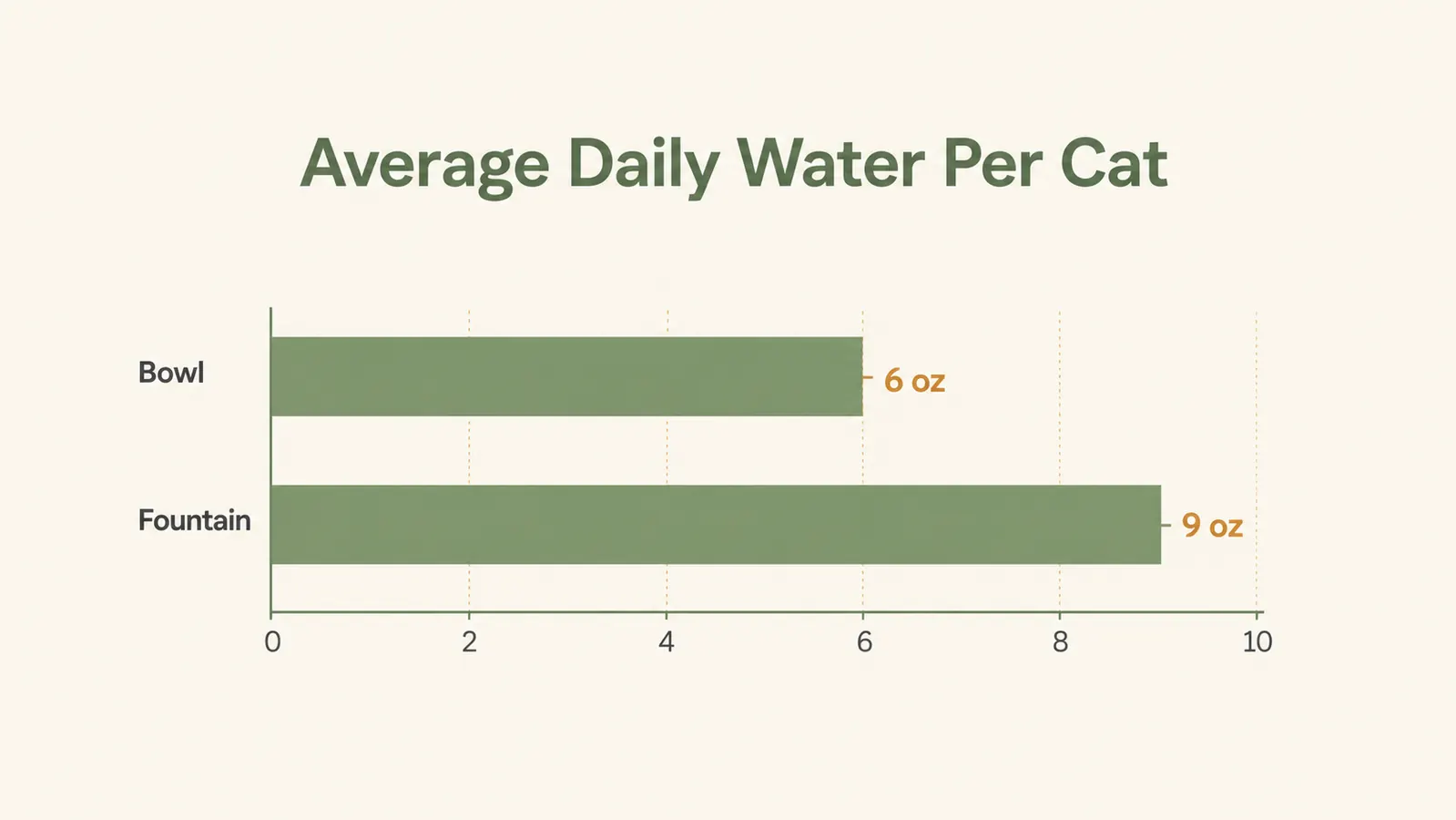
The first and most important win is the one that matters most: actual intake. I am a measurer. I bake, I make my own bath salts, I keep a kitchen scale, and I write things down. Before the fountain arrived I filled two white bowls every morning and marked the waterline with a dry-erase tick on the outside. Average across Mabel, Gus, and Clementine, counting only what they lapped and not the water folded into their wet food, came out to about six ounces per cat a day. That sits on the low side of what a vet wants, especially for a senior cat.
The first week with the Wonder Creature running, that number went from roughly six ounces to nine ounces per cat a day, and it has held ever since. Mabel is the star of the data. She parked herself in front of the stream the first afternoon like it was a small waterfall at the zoo. Three weeks in, the bathroom sink went silent for the first time in years. That is not a fluffy anecdote. That is the behavior of an animal who finally trusts her water supply, and it is the exact habit behind the bladder and kidney problems vets see in cats who just will not drink.
Mechanically, the fountain does two things a bowl cannot. It moves the water, and it filters the water. The movement matters because cats decide what to drink by instinct, not by manners. Still water reads as standing water, and standing water in a cat's mind is stale, scummy, and possibly sampled by something else. Running water reads as a stream, and streams are clean. The carbon filter handles taste and odor on top of that, which matters when three cats share one source. The bowl relies on me rinsing it twice a day. The fountain does that job around the clock whether I remember or not.
One more detail about the bowl side, because I tried to fix that problem with hardware first: cats read a water dish with their whiskers. If the bowl is deep enough that a cat's whiskers brush the rim while she drinks, many of them will refuse it on principle, no matter how fresh the water is. The fountain sidesteps that entirely, because the water offers itself as a moving surface at the edge of the basin rather than a pool to dip a face into. Mabel's whiskers are long, and I suspect the old bowl was giving her a face-full of ceramic every time she tried. Six weeks in, I am sure the running water did the heavy lifting, but the absence of a whisker barrier did not hurt.
If your cat greets its bowl with suspicion, the fountain calls that bluff.
The Wonder Creature fountain moves 2.4 liters of water through a carbon filter, and more than 57,000 Amazon reviewers have put the same unit to work. Check today's price and availability before you make the call.
Amazon Check Today's Price on Amazon →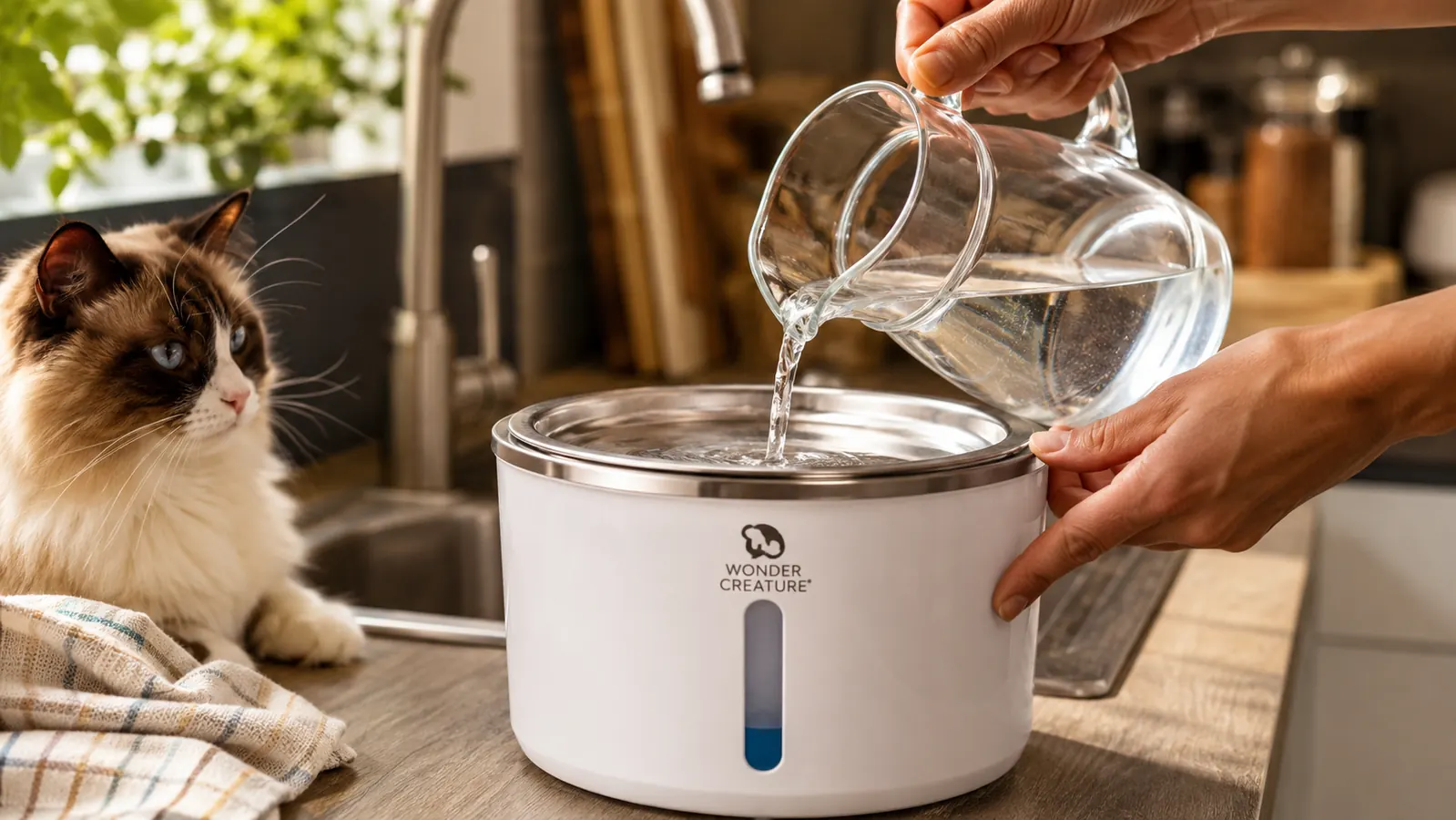
Where the Bowl Wins
I am not going to pretend this is a rout, because it is not. The water bowl has real advantages, and the first one is honesty about cost. If you already own a bowl, this option is free, and even a nice heavy ceramic one is only a few dollars. The fountain costs more up front, and it wants a new carbon filter every few weeks. Over a year, the filters add up to real money. For a cat who already drinks well from a bowl, you are paying extra to solve a problem that cat does not have. Mabel forced the issue in our house. Plenty of cats never will, and those cats do not need one.
The bowl also wins on dependence and ease. A bowl needs no outlet, no pump, no parts, and no teardown. Rinsing it takes thirty seconds. The fountain has a pump, and a pump is a moving part, and a moving part can whine, clog, or quit. I learned this the week I soaked the pump impeller in vinegar to descale it and then walked away mid-task. The backup bowl under the counter carried all three cats that day, no fuss, no drama. The same thing happens when the power goes out in a storm. Any home that already keeps a sensible bowl should keep one filled even after the fountain arrives.
The honest version of all this is that a fountain is a commitment at least as much as it is an appliance. You are signing up for a weekly teardown, a filter budget, and the discipline to keep water above the pump intake. If your life is already loud enough that adding another routine makes you wince, or if you rent a place with one outlet per room and it never seems to sit where the cats want to drink, the bowl is not the inferior choice. It is the low-friction choice, and low friction wins a lot of Tuesdays.
The bowl is not a failure for every cat. It fails for the kind of cat who already avoids water, which happens to be the kind of cat whose kidneys you want to protect.
The Real Tradeoffs
The smaller tradeoffs are worth naming so you are not surprised by them. The fountain is not silent. The pump hums and the water trickles, and if your bedroom shares a wall with where it sits, you will hear it at night. We moved ours to the downstairs bathroom and that solved it, but it is part of the deal. Two of my three cats were wary of the motor on day one. Clementine hid under the armchair for a solid hour before she crept out to inspect it. By day three all three were using it, which is a normal timeline. Just do not expect instant acceptance from every cat, because the first impressions of a humming appliance are earned, not automatic.
The other two are mechanical. If the water level drops below the pump intake, the pump runs dry, which is loud and bad for it, so topping off becomes part of the routine rather than a chore you can skip. And the LED water-level window on this model looked to me like the gimmick I assumed it was. It turned out to be useful, which I mention because I like being wrong about that. I can check the tank from across the room and nobody has to lift the heavy 2.4-liter basin just to peek inside. Small thing, but it did actual work.
The upkeep is not complicated, but it is real, so here is the short version. Every three or four weeks I swap the carbon filter, rinsing the new one in plain water first. Every week or so I take the unit apart, wipe the stainless lid, and scrub the pump impeller under warm water. No soap on the pump, because the foamy residue lingers and the cats smell it for days. About once a month the pump gets a shallow soak in white vinegar to break up mineral scale, which is the same trick I use on my baking pans. That ritual takes ten minutes. Skip it for two weeks running and you will hear about it from the pump before the cats do.
Who Should Buy Which
Buy the fountain if your cat skips the bowl and hunts for sinks, if you have a male cat (they are the ones who get blocked urinary tracts), if your cat eats dry food, if you have a senior cat whose vet has mentioned hydration, or if you share a home with more than one cat and the bowl is effectively a shared germ pool. That is the group where a fountain stops being a luxury and becomes preventative care wearing a water dish costume. It is also the group where the measured difference I saw, six ounces to nine ounces a day, is the difference between a vet's concern and a clean checkup.
Keep the bowl as your only plan if your cat drinks well from it, if you have no handy outlet, or if you are such a light sleeper that a hum would actively drive you from a good decision. And here is the honest part, the part I would tell you at my kitchen table: even in a fountain house, keep one bowl filled. The fountain is a tool, not a takeover. Our three cats still drink from the backup bowl when it suits them, and that backup bowl is exactly what saves us on cleaning day and power-outage night. Best does not mean either-or. It means both, working together, with the fountain earning the heavy lifting.
One placement note before you decide, because placement decides whether any of this works. Cats would rather drink away from where they eat and away from the litter box. The day I moved the water to a spot the cats walked past on the way to the sunny hallway, intake improved even with the old bowl. If you try a fountain, give it a spot with some daylight and distance from the food station, and do not be surprised if your cat snubs it for two days. They are checking the new watering hole for predators before they trust it, the same way they would at a real stream on a hike.
For the longer story of what six months of daily use did to the pump, the filters, and the cats, see the six-month review here. And if you want the unvarnished list of what I wish I had known before buying, the honest review covers the complaints that never make it into the five-star pile.
Mabel drinks close to nine ounces a day now, and the bathroom sink finally gets a rest.
The Wonder Creature fountain is the tool that did it. Check today's price, and keep your backup bowl ready for the days the pump is on the mend.
Amazon Check Today's Price on Amazon →