
Let me guess how vet day starts at your house. You reach for the carrier, the cat takes one look at the mesh, and suddenly you are chasing a very determined animal under the couch while your appointment time ticks away. I did that dance twice a year with my three cats for longer than I like to admit, until I finally worked out what actually makes the trip easier. The Henkelion soft-sided carrier was the biggest part of it, but it was never the only part.
Vet visits are stressful because for a cat they are a chain of five unfamiliar things stacked on top of each other. The carrier appears, the house changes, the car moves, a stranger picks them up, and there are smells they do not recognize. Most of my early mistakes were trying to fix the car ride or the vet's office when the real problem started at the closet door. So here is the way I do it now, one step at a time, and it has turned the whole thing from a wrestling match into a mostly quiet trip. It happened by accident over a few months, not overnight, and you should expect the same.
The carrier that stopped my nightly standoff
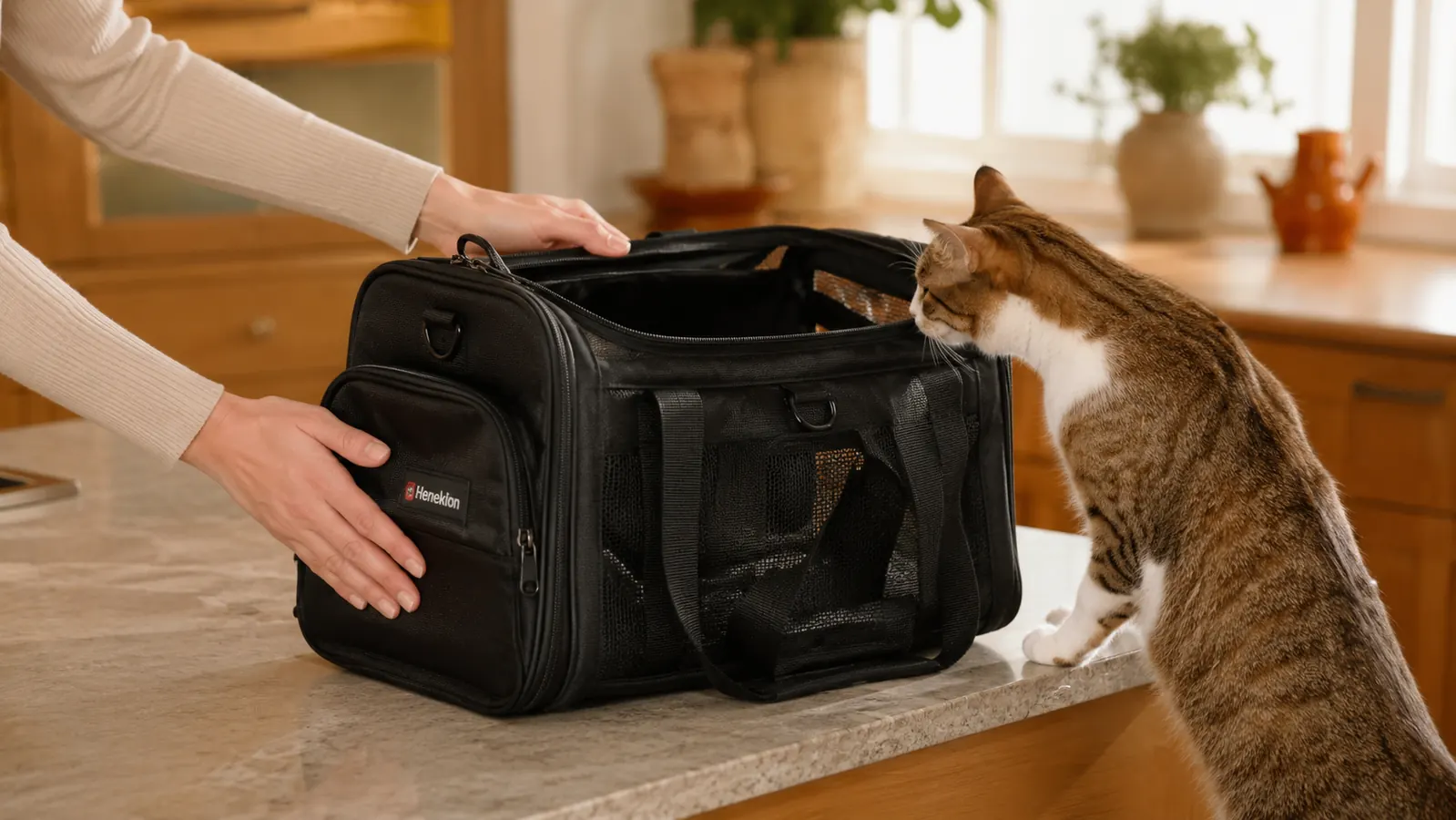
The Henkelion soft-sided carrier is what I use with all three of my cats. It opens fully at the top so they climb in on their own instead of being shoved, and it survives a wash when someone gets car sick. Check the current price on Amazon.
Amazon Check Today's Price on Amazon →Step 1: Stop treating the carrier like a trap
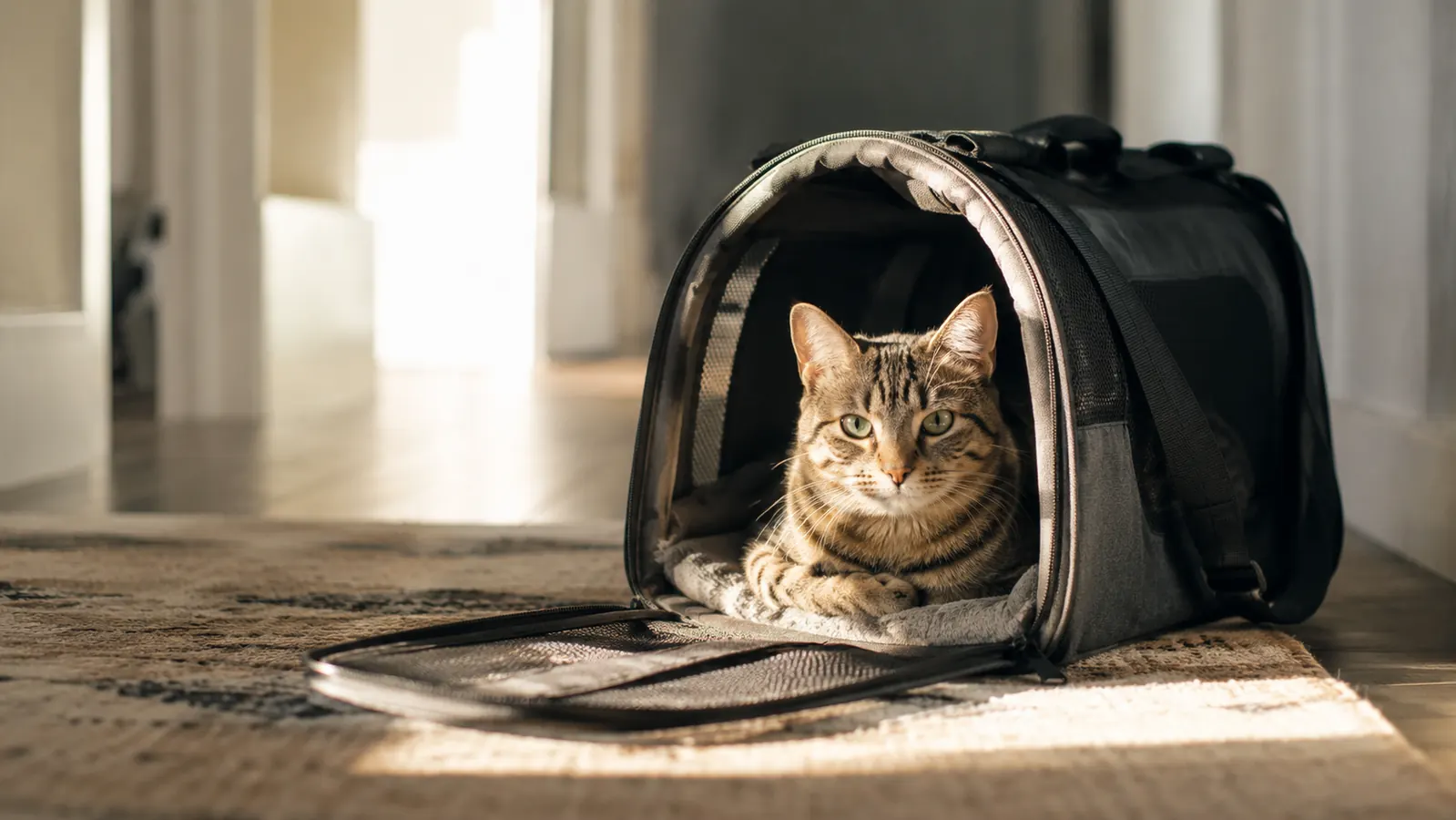
The single biggest change I made was leaving the carrier out all the time instead of hiding it in a closet for eleven months. A cat is a wild animal with strong opinions about its territory, and a carrier that only ever appears on vet day is learned as a trap. It shows up, the door shuts, and suddenly the world is moving, so of course the cat files it under terrifying and spends the next fifty one weeks avoiding it. When it lives in the corner of the living room with the door wedged open and a towel inside, it slowly becomes just another piece of furniture.
I put a soft blanket my older cat already slept on inside and dropped the occasional treat in there. I did not push any of them into it and I did not close the door for the first couple of weeks. Within about two weeks, all three of mine were napping in it, and my most suspicious cat treated it as her private den. That is the whole trick: you want the carrier to be the boring, safe thing, not the scary thing that means the car.
This is where the carrier itself matters. The Henkelion opens from the top, which I found to be the difference between a cat that walks in and a cat that is pushed. Cats hate being backed into a dark hole. A top you can unzip and lift lets them step down into it, which reads as a choice, and cats love a choice. Mine step in through the top and settle in better than any of them ever did being slid face first into a hard crate.
Step 2: Pick a carrier the cat can't fight
The kind of carrier you buy sets the ceiling for how calm the visit can be. A hard plastic crate is sturdy and safe for the car, but it is dark, drafty, and awkward to get a cat in and out of, which is why so many vet trips start with a fight at the door. A soft-sided carrier like the Henkelion collapses flat for storage, zips open from the top, and lets light and air in through the mesh, so the cat has something to look at instead of a wall. The mesh is also a whole different experience for a cat that likes to watch the world go by.
It is rated for cats and small dogs up to 15 pounds, which covers my three, and the mesh windows mean I can unzip the front and let the vet peek in before opening it fully. One of my cats trusts the exam room okay but panics the moment the vet reaches in blind. With the Henkelion, the vet unzips the whole top and there is no grabbing the cat's head first, which cut my most anxious cat's exam from a fight to a few unhappy minutes. Being able to open the whole thing flat was the detail that made the biggest difference at the clinic.
Shake the thing before you buy it. The biggest complaint people have about cheap carriers is that they bend when you grab the handle, which is unnerving for you and the cat. The Henkelion has a firm structure and holds its shape well enough that I can carry my heaviest cat one-handed up a flight of stairs without it folding in on her. It also has a padded shoulder strap, which sounds like a small thing until you are trying to keep both hands free for the door and the keys.
Step 3: Make the car ride boring on purpose
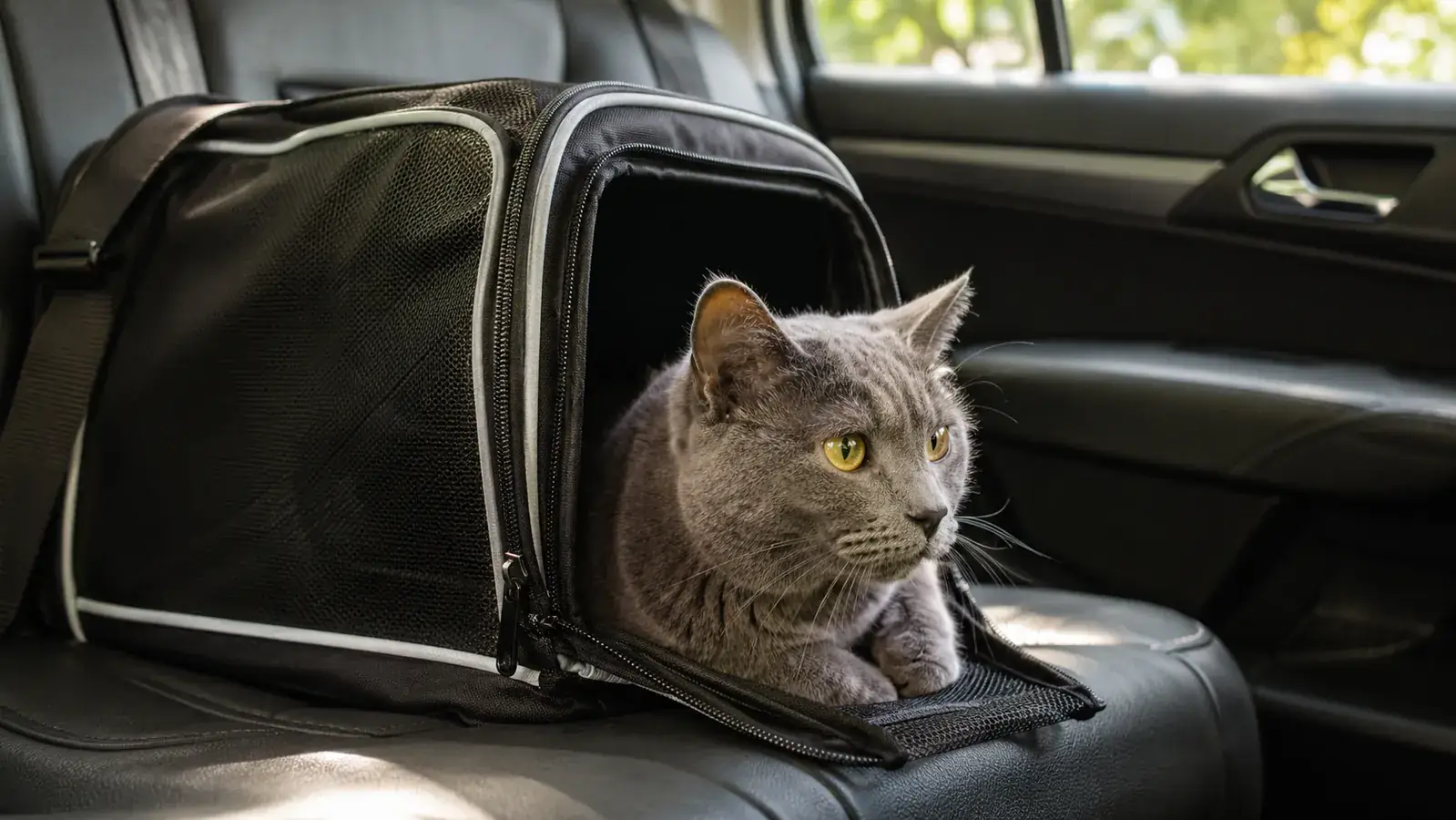
The car is where cats go from nervous to sick, and a lot of that comes from the motion being amplified and the smell of the ground being gone. I learned three small things that help. First, put a towel or blanket over the carrier so the moving world is mostly hidden, which calms a lot of cats more than leaving the windows open. The visual rush of the highway is genuinely overstimulating for a cat, and taking it away is worth more than I expected.
Second, set the carrier on the floor or on the seat against the backrest with the handle side facing the seat so it does not slide around with hard braking. A carrier that moves under the cat is experienced as the world being unstable, which is exactly the opposite of what a nervous animal needs. I wedge a folded towel on the far side in my car so nothing shifts even around a corner. Top-loading carriers like the Henkelion are also easier to secure flat, which helps the ride feel settled.
Third, and this one surprised me, I drive gently. Cats read motion through the carrier, so hard acceleration and sharp turns feel twice as violent to them as they do to me. I used to drive the same way I always do and wondered why my cat arrived looking wrecked. Short, smooth drives to the vet mattered more than anything I sprayed on the carrier beforehand.
One tip from a zookeeper friend who works with big cats: sit quietly in the car for a minute before you drive instead of starting the engine the second the door is shut. That small pause lets the cat reset after the getting-in drama and made a real difference in how my most car-sick cat handled the ride. She went from drooling and panting within two blocks to making the whole trip with only a little grousing.
Step 4: Practice the exam-room drill at home
Most of what stresses a cat at the vet is not the vet, it is the sudden grabbing and restraint after an hour of adrenaline. I started practicing a gentler version at home so the motions were not a surprise. Once a week I lift my cat the way the vet does, one hand under the chest and one under the hips, hold her for a few seconds with a treat nearby, then set her down. The first few times she squirmed, but she learned the pattern fast because nothing bad ever followed it.
I also got her used to her paws being handled and her ears touched, because those are the two spots the vet always checks and they are the two spots most cats guard hardest. I started with a single toe, gave her a treat, and worked up from there over a few weeks. It never makes her love it, but she learned that being held and examined does not hurt and that a treat usually follows. The first truly easy exam I had was the one where she already knew the routine.
Tell the vet ahead of time if your cat is anxious. I ask for the last appointment of the day or a quiet slot, which in my clinic means fewer barking dogs in the waiting room, and that alone shaved a lot of the hissing off the visit. A calmer waiting room means a calmer car ride home, and it is a request most clinics are happy to honor if you just ask.
Step 5: Get the timing and the scents right
Two details I did not expect to matter as much as they did. First, when I feed. I stopped feeding my cats for a couple of hours before the trip, mostly so the car ride did not turn into a mess, but it also means they are a little more food-focused and less motion-sick. A non-sick cat is a calmer cat, and I have a box of soaked towels and an empty stomach to thank for figuring out the feeding part the hard way.
Second, bring the smell of home. I put a worn shirt of mine or their usual blanket in the carrier, and I bring a spare with me. When the vet needs the blanket for the exam table, I hand them my shirt instead, so the exam room smells like me rather than like a hundred other animals. Cats are driven by scent far more than we are, and a familiar one does the job that no amount of calm talking can do.
What Else Helps
A good carrier and a few habits will carry you most of the way, but if your cat is genuinely terrorized by vet trips, it is worth talking to your vet about a mild anti-anxiety medication given before the visit. I was stubborn about this at first because I hate reaching for pills, but for one of my cats a low dose is the difference between a traumatizing two days and a manageable hour, and that is a tradeoff I am now glad to make. It is not giving up, it is giving your cat a fair shot at a calm visit.
Feliway-style calming sprays on the carrier blanket help some cats and do nothing for others, so I would not drop money on them as the whole plan, but a few spritzes on the towel are cheap insurance that costs nothing if it does not work. And when the visit is over, come straight home and give them food, a favorite blanket, and space. Do not flood them with attention the second you walk in the door, no matter how relieved you are that it is over. Cats need to decompress the way we do, and the faster they settle back into their territory, the faster the whole thing gets sealed over as just another day.
The other piece of the puzzle is keeping the appointments themselves from piling up. Regular wellness checks mean the vet visit is routine, not a rescue, and a cat that only ever sees the vet when something is already wrong learns to dread the place. My nervous cat did noticeably better once she started seeing the vet for a yearly checkup instead of only for ear infections. Familiar rooms are less scary rooms, for cats exactly the way they are for us.
The Henkelion carrier sitting out with the top unzipped stopped being the trap my cats flee and became the safe spot they nap in. That one change did more for vet day than anything I did in the car.
Start this weekend with the carrier that made my cats stop running
You do not have to buy anything fancy. A Henkelion soft-sided carrier, left out with the top open and a familiar blanket inside, is the single easiest place to start. It is washable, it opens from the top, and it holds cats up to 15 pounds comfortably. Check today's price on Amazon.
Amazon Check Today's Price on Amazon →